Call Now
(866) 971-0927
Menu
Call Now
(866) 971-0927
Menu


Written/Reviewed By:
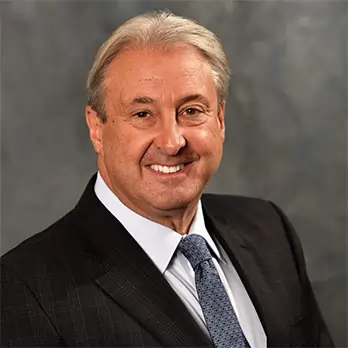
Barry S. Kantrowitz, Esq.
Last Updated: Aug 27, 2026

Read Time: 16 mins
Are you looking for a divorce lawyer in Hackensack?
At Kantrowitz, Goldhamer, Graifman, Perlmutter & Carballo, P.C., we are Hackensack, NJ divorce lawyers committed to thorough preparation in every matter we handle.
If you are considering a divorce or have already been served with papers in Hackensack, NJ, an experienced attorney can help you work through the legal, financial, and personal decisions ahead. Divorce affects property rights, parental responsibilities, and long-term financial stability, and the choices you make early often shape the final outcome.
KGG Law has represented clients in divorce and family law matters since 1975. We handle contested and uncontested cases across Bergen County and throughout New Jersey. Our Hackensack, NJ divorce lawyer can evaluate your case in a free consultation.
Divorce is the legal process of ending a marriage. In New Jersey, either spouse can file for divorce in the Superior Court Family Division of the county where they reside. The process addresses issues including property division, spousal support, child custody, and child support.
Every divorce is different. An uncontested case where both parties agree on the major terms can move through the court relatively quickly. A contested divorce involving disputes over finances, custody, or other issues requires more time, more preparation, and often more negotiation. A divorce attorney in Hackensack, NJ can assess where your case falls on that spectrum and help you plan accordingly.
Divorce cases involve a range of legal issues, and the specific facts of your marriage determine which ones will need to be resolved. At KGG Law, we handle:
Hackensack is the county seat of Bergen County, and the Bergen County Superior Court Family Division handles all divorce filings in this area. Randy J. Perlmutter has practiced family law at KGG Law since 2002. He is licensed in New Jersey and New York and has focused his practice on divorce, custody, and support matters for over two decades.
He volunteers as an Early Settlement Panelist in Bergen County, where he reviews pending family law cases and advises parties on possible settlement terms. That role gives him a working familiarity with the Family Division’s procedures, timelines, and judicial expectations that directly benefits clients who file in Hackensack. Super Lawyers has recognized him as a New York Metro Super Lawyer from 2021 through 2025, and he holds a 5.0 rating on AVVO.
KGG Law has handled divorce and family law cases for over 50 years. The firm has secured favorable outcomes in contested custody matters, negotiated complex property settlements, and resolved alimony disputes for clients across Bergen County. Our attorneys know the key issues in divorce and work toward resolutions that serve our clients’ long-term interests.
New Jersey permits both no-fault and fault-based divorce. The most commonly cited ground is irreconcilable differences, which requires that the differences have existed for at least six months and that there is no reasonable prospect of reconciliation. Fault-based grounds include extreme cruelty, adultery, and desertion, though these are less frequently used.
Property division in New Jersey operates under equitable distribution principles. The court considers a number of factors when dividing marital property:
Only marital property is subject to division. Separate property, which generally includes assets acquired before the marriage or received as gifts or inheritances, is excluded unless it has been commingled with marital funds.
The outcome of a divorce depends on how well each side prepares. Disputes over finances, visitation, and support are common, and each one requires thorough documentation and a clear strategy.
The length of a divorce in New Jersey depends on whether the case is contested or uncontested and the number of issues in dispute. Bergen County handles divorce cases through the Superior Court Family Division in Hackensack.
Preparing documentation before your first meeting with a divorce attorney in Hackensack allows for a more productive conversation. A divorce consultation checklist can help, but in general you should bring:
Your attorney will review this information and help you understand your options. Consultations at KGG Law are free and confidential.
New Jersey has a detailed body of family law statutes and court rules governing divorce proceedings. The following resources can help you locate relevant information and understand the process.
If you are considering a divorce or need to respond to one in Hackensack, NJ, our divorce attorneys can help you understand where you stand. We offer a free initial consultation to review your situation and explain the process. During the meeting, we will discuss the issues in your case and outline a path forward. Contact us to schedule a confidential consultation.
 Divorce cases from Hackensack are heard at the Bergen County Justice Center, and the volume of family filings there reflects the size of the county it serves. New Jersey reports one of the lowest divorce rates of any state that submits data to the National Vital Statistics System. That does not make individual cases simple. Households in this part of Bergen County often hold real estate, retirement accounts, and business interests that require careful division, and a divorce attorney in Hackensack spends much of the case working through exactly those assets.
The statewide numbers have moved downward for two decades. Fewer couples divorce, but the couples who do often face more complicated financial questions than filers a generation ago, partly because people now marry later and bring more separate property into the marriage.
No two divorces resolve the same way. The facts of your marriage, the approach both sides take, and the preparation behind your position all influence the final judgment. These are the factors we see shape outcomes most often in Bergen County.
Cost depends on whether the case is contested and how many issues remain in dispute. An uncontested matter with a signed settlement agreement costs far less than litigation over custody or a business valuation. We discuss fees openly at the initial consultation, so you know what to expect before committing.
An agreement still has to be drafted, reviewed, and entered correctly. Errors in a settlement agreement can affect your finances for years after the judgment. Even in amicable cases, having your own attorney review the terms protects you before anything is signed.
Divorce actions for Hackensack residents are filed with the Superior Court Family Division at the Bergen County Justice Center on Main Street. The courthouse sits in downtown Hackensack, so filings, case management conferences, and hearings all take place close to home.
No. New Jersey follows equitable distribution, which directs courts to divide marital property fairly rather than equally. A judge weighs the length of the marriage, each spouse’s contributions, and the parties’ economic circumstances before dividing assets and debts.
It can serve as a fault-based ground for filing, though most cases proceed on irreconcilable differences. Adultery rarely changes property division on its own, but it may become relevant if marital funds were spent in connection with the affair.
Either spouse can be ordered to pay spousal support. Courts weigh the length of the marriage, each party’s earning capacity, and the standard of living the couple maintained. Duration depends on the type of alimony awarded and the facts of the case.
New Jersey applies statewide guidelines that account for both parents’ incomes, the number of children, and the parenting schedule. Child support obligations can later be reviewed when circumstances change, such as a job loss or a significant increase in income.
Yes, in certain circumstances. Courts consider post-judgment modifications to custody, support, and alimony when a party shows a substantial change in circumstances. Relocation, remarriage, and lasting income changes are among the most common reasons.
Most divorces settle. Bergen County builds settlement opportunities into the process, including the Early Settlement Panel and economic mediation. Trial remains available when the parties cannot resolve an issue, but it is the exception rather than the rule.
Gather your financial records, avoid major purchases or account transfers, and speak with a divorce lawyer in Hackensack, NJ before making decisions about the house or the children. Early guidance prevents mistakes that are difficult to undo once the case is underway.
All divorce, custody, and support matters for Hackensack are handled by the Family Division at the Bergen County Justice Center, 10 Main Street, Hackensack, NJ 07601. The building houses the courtrooms where motions are argued, the intake windows where Case Information Statements are filed, and the offices of the Early Settlement Panel. The New Jersey Courts publish current hours, directions, and contact information for each division of the Bergen Vicinage. Public parking is available in the garage on Court Street next to the courthouse.
Several public offices and nonprofit organizations serve Hackensack families during and after a divorce. Cases involving safety concerns or restraining orders often proceed alongside domestic violence matters in the same courthouse.
KGG Law is not affiliated with these organizations and does not endorse them. This list is provided for informational purposes only.
Our firm was co-founded in 1975 by Walter L. Kantrowitz and Paul Goldhamer, a founding partner who devoted his career to divorce and matrimonial law and earned an AV Preeminent rating from Martindale-Hubbell. He also taught legal courses at New York University, Fordham, and Columbia. The matrimonial practice he established continues today, including favorable outcomes in contested custody disputes and parental alienation cases our attorneys resolved for a client. Hackensack divorce attorneys from our Montvale office appear regularly in the Bergen County Family Division.
⭐⭐⭐⭐⭐
“Randy Pearlmutter & his entire team were amazing. They helped navigate what could have been a difficult situation & made the whole process much smoother. We appreciate the lawyers as well as the staff that worked so hard to get us such a positive outcome. Thank you Kantrowitz, Goldhamer & Graifman P.C.!!” – Jaclyn Smith
Read more reviews on our Google Business Profile.
If you are preparing to file for divorce in Hackensack or need to respond to a complaint your spouse has filed, our attorneys are ready to review where you stand. The initial consultation is confidential. We will go over your finances, explain how the process works in the Bergen County Family Division, and answer your questions directly. We return calls promptly and serve Hackensack clients from our nearby Montvale office. Contact us to schedule your consultation.




