Call Now
(866) 971-0927
Menu
Call Now
(866) 971-0927
Menu




Written/Reviewed By:
Barry S. Kantrowitz, Esq.
Last Updated: Sep 29, 2026

Read Time: 10 mins
If you’ve been hurt in a fall on someone else’s property in New York or New Jersey, you may be wondering whether you have a viable legal claim. People do fall, and not every fall is someone else’s fault. But when a property owner knows about a dangerous condition on their premises and does nothing to fix it or warn visitors about it, that failure constitutes negligence, and negligence is the foundation of every slip and fall case.
These cases are more difficult to prove than most people expect, because property owners and their insurers routinely argue that the hazard was obvious, that you should have been watching where you were going, or that the condition had not existed long enough for anyone to address it. At Kantrowitz, Goldhamer, Graifman, Perlmutter & Carballo, P.C., our New York and New Jersey slip and fall lawyer has been fighting for injured people in premises liability cases since 1975. We offer free consultations and take cases on contingency.
Trusted slip and fall lawyers with over 51 years of experience.
What do you need to prove in a slip and fall case?
A slip and fall claim is a type of premises liability case, and to recover compensation you generally must prove three things: that a dangerous condition existed on the property, that the property owner or occupant knew about the condition or should have known about it through reasonable inspection, and that the dangerous condition caused your fall and resulting injuries. In New York, the law distinguishes between actual notice, meaning the owner was directly informed of the hazard, and constructive notice, meaning the condition existed long enough that a reasonable property owner conducting ordinary maintenance would have discovered and addressed it. New Jersey follows a similar standard, and property owners owe a duty of care to lawful visitors that varies depending on whether the visitor is classified as an invitee, a licensee, or a trespasser under the NJ landowner liability framework.
Falls happen in all kinds of locations, and the setting affects who is responsible and what evidence is available. Our firm handles slip and fall claims across a range of properties.
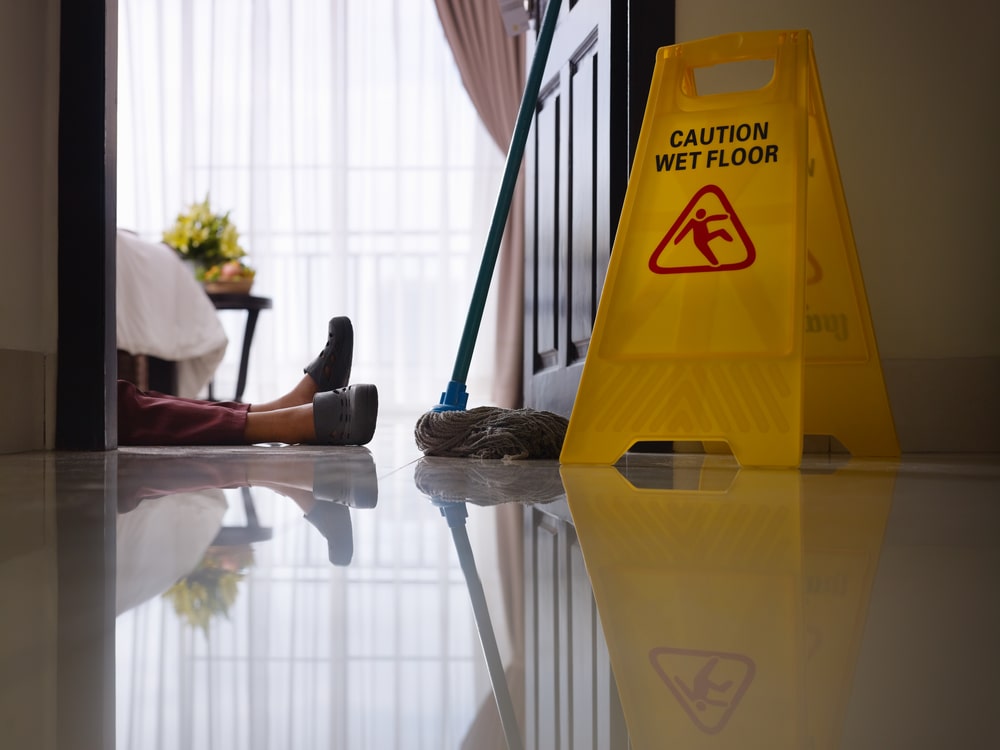
Our firm has a proven record in slip and fall litigation. We secured a $1,038,000 jury verdict for a man who fell down an interior stairway, an $826,000 jury verdict for a woman who fell on a broken curb in an apartment complex where the defense initially offered nothing and increased their offer to only $200,000 after a liability finding, a $300,000 pre-trial settlement for a deck fall at a residential home, and a $97,500 settlement for a slip and fall at a retail store. These are among the millions of dollars we have recovered for clients across New York, NY and New Jersey, NJ.
Barry S. Kantrowitz has more than 40 years of courtroom experience, holds an AV Preeminent rating from Martindale-Hubbell, and has been named a Super Lawyer in New York. He is a member of The National Trial Lawyers and graduated from Boston University School of Law.
Kate Carballo focuses on personal injury litigation and holds the Certified Civil Trial Attorney designation from the New Jersey Supreme Court. She is a member of the American Association for Justice.
Our personal injury lawyer in New York and New Jersey knows how to prove liability and document the scene effectively even in contested fall cases.
“Barry Kantrowitz exceeded my expectations. His expertise and personal approach made me feel confident throughout the process. I am extremely satisfied and grateful for his help!” — Michelle Ballane
People tend to underestimate how much damage a fall can do. A 55-year-old woman who slips on an unmarked wet floor in a grocery store and lands on her hip might walk out of the ER thinking she has a bad bruise, only to learn two days later that she fractured her acetabulum and needs surgery with a four-month recovery. A 70-year-old man who trips on a raised sidewalk slab and hits his head may develop a subdural hematoma requiring emergency surgery. These are not unusual outcomes.
In a premises liability claim, you can recover the full cost of medical treatment connected to the fall, including surgeries, hospital stays, rehabilitation, prescription medications, and assistive devices like walkers or braces. Lost wages during recovery and reduced earning capacity are compensable when the injury affects your ability to work. And juries in both New York and New Jersey regularly award compensation for chronic pain, limited mobility, and the loss of independence that follows a serious fall.
Proving that the property owner is responsible comes down to notice. If the owner knew about the hazard and did not fix it, that is actual notice and liability follows directly. If the hazard existed long enough that any reasonable owner conducting routine maintenance would have found it, that is constructive notice. A puddle of water that formed from a leaking ceiling tile and sat on the floor for two hours before someone slipped in it is a strong constructive notice case. A spill that happened 30 seconds before someone stepped in it is much harder to prove. The property’s maintenance logs, inspection schedules, and prior complaints about the same or similar conditions all become critical evidence.
The number one reason slip and fall claims fail is that the injured person left the scene without creating any record of what happened. If you fell in a store, a restaurant, or an apartment building common area and did not report it to management and did not take photographs of the condition that caused you to fall, proving your case becomes significantly harder. Property owners are not required to preserve evidence of a hazard that no one reported, and by the time you realize you need a New York and New Jersey slip and fall lawyer, the wet floor has been mopped, the broken step has been repaired, and the only evidence that the hazard existed is your word.
Document the scene before you leave if you are physically able to do so. Photograph the hazardous condition from multiple angles. Include the surrounding area, any warning signs or the absence of them, and the lighting conditions. Ask the property owner or store manager to create an incident report, and get a copy before you leave.
See a doctor on the same day as the fall. This is not just medical advice. It is legal strategy. The defense in every slip and fall case looks for a gap between the date of the incident and the first medical visit, and they use that gap to argue that your injuries must not have been serious or that something else caused them. Showing up at an orthopedist three days later with a swollen knee gives the insurance company room to question whether the fall is really what hurt you. Going to the ER the same afternoon does not.
Keep the shoes you were wearing because the defense will argue your footwear was inappropriate, and having the actual shoes eliminates that speculation.
Premises liability cases in New York, NY and New Jersey, NJ follow a general progression that typically includes the following phases.
To help us evaluate your case, bring the following to your first meeting.
The consultation is free.
These resources can help you research New York laws related to premises liability and slip and fall claims:
These resources cover New Jersey premises liability law and building codes:
If you were injured in a fall on someone else’s property in New York or New Jersey, Kantrowitz, Goldhamer, Graifman, Perlmutter & Carballo, P.C. can help you pursue full compensation. Contact us for a free case evaluation.




